Inside the sprawling glass vastness of the Javits Center, Boutique Design New York (BDNY) serves as a rigid indicator of the hospitality industry’s aesthetic direction. It is no longer a trade fair of mere commodities; it is an ecosystem of spatial narratives where design functions as the literal infrastructure of influence. The recent showcases at BDNY confirmed a decisive industry pivot: hospitality design has moved away from loud, spectacle-driven excess toward an era of experience-driven restraint. High-end hoteliers and specifiers are actively rejecting the over-decorated, Instagram-optimized anomalies of the past decade. Instead, they are demanding material honesty, structural permanence, and objects that respect the architectural envelope.
Nowhere was this shift more apparent than in the evolution of BDNY outdoor furniture trends. As boutique hospitality groups look to maximize the footprint and lifespan of urban rooftops and resort pool decks, the traditional cantilever umbrella has come under scrutiny. Seen for too long as a bulky, mechanical disruption, the shading category required a radical simplification. At the center of this movement, Royal Botania’s column-shading innovations emerged as the definitive silhouette of the season—proving that the most powerful design statement is often the one that removes the noise entirely.
THE ARCHITECTURAL IMPERATIVE: DISCARDING THE MECHANICAL OVERLAY
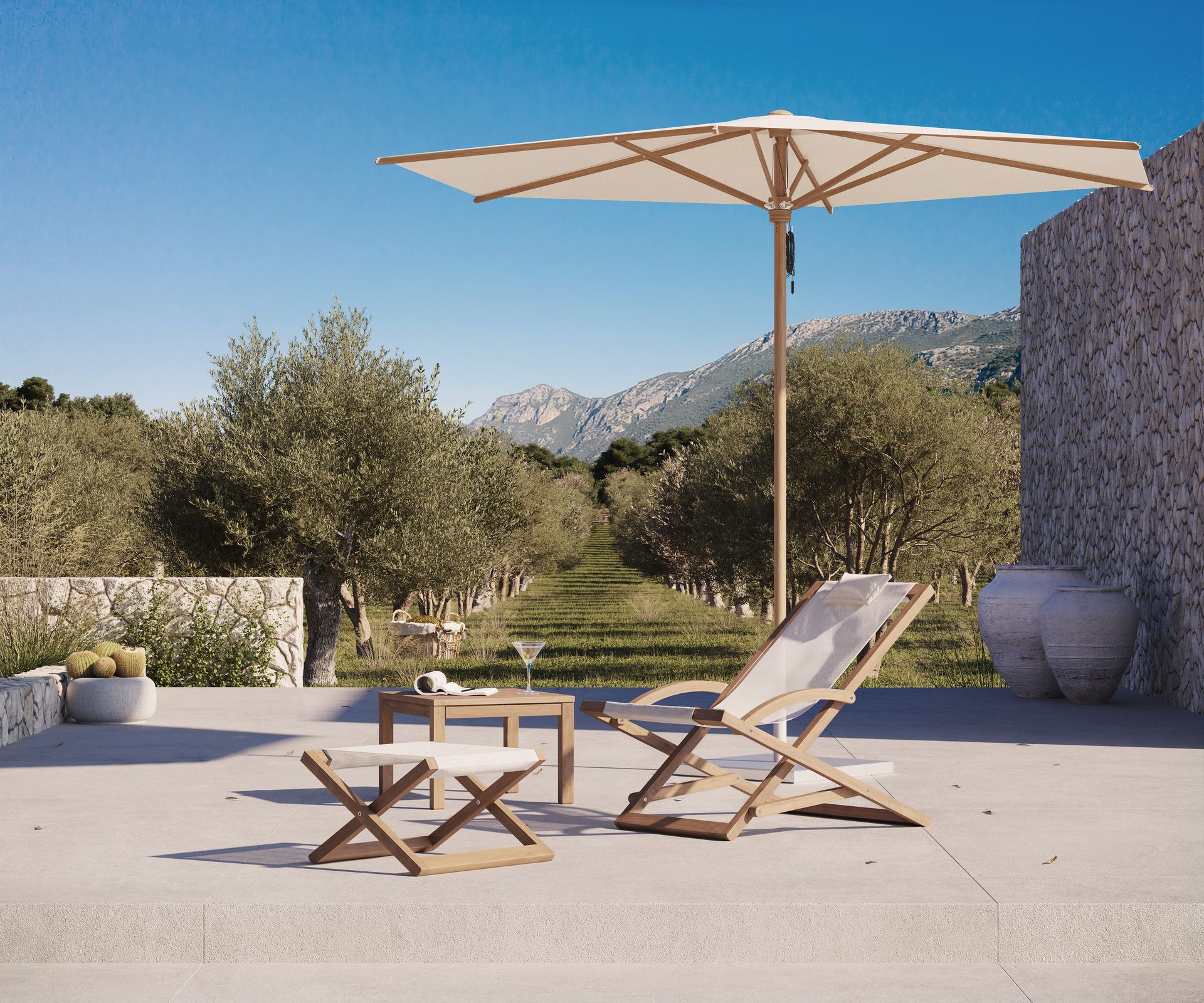
For the procurement professionals orchestrating luxury hospitality design NYC, every object placed on a commercial terrace must justify its presence. Traditional high-end shading options frequently fail this test at an aesthetic level. They are heavy with visible infrastructure—exposed hinges, external struts, and awkward lateral arms that fracture the skyline view.
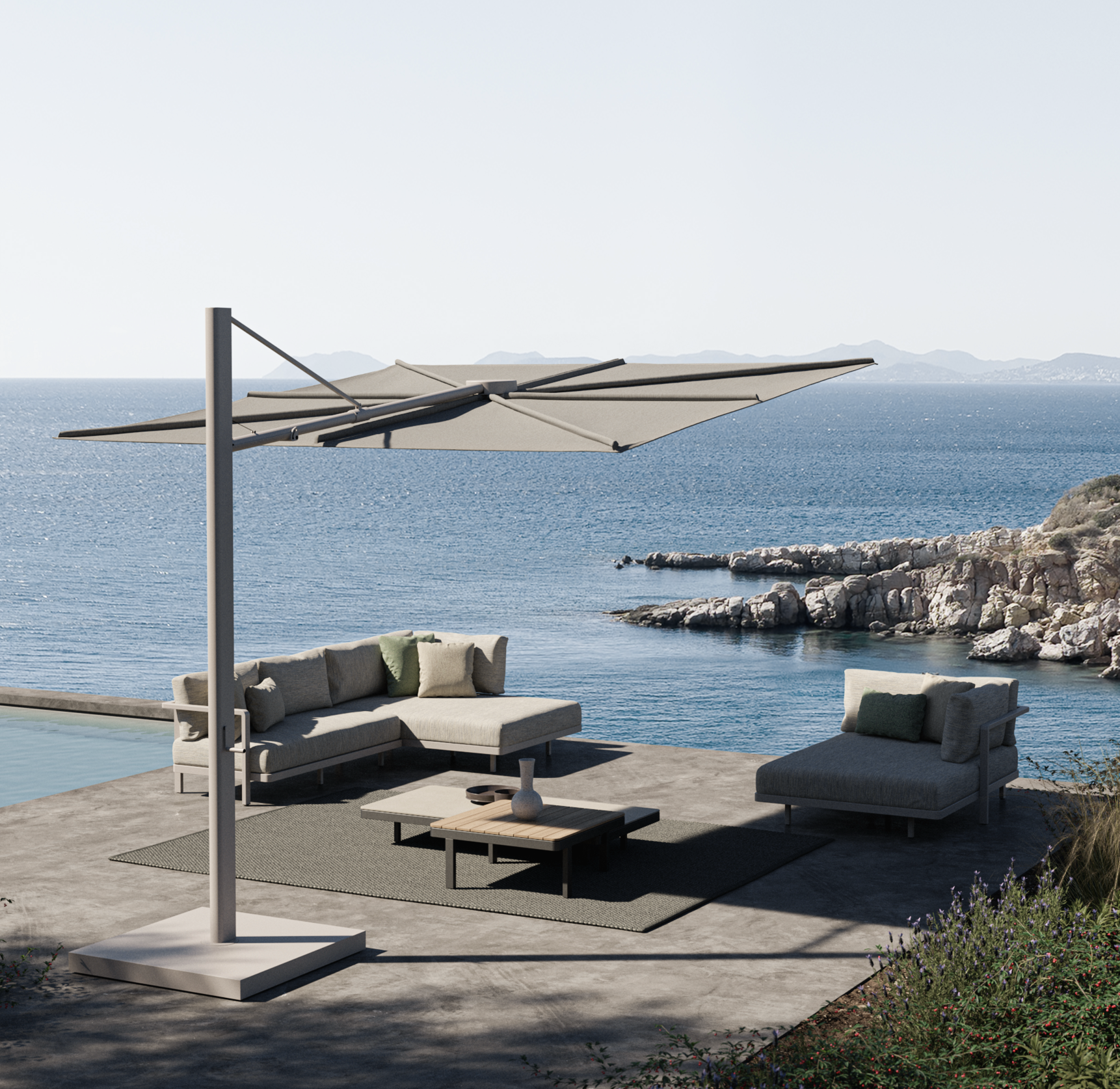
When deployed across a crowded hotel pool deck or a high-traffic restaurant terrace, these conventional designs create a chaotic visual field. The design community at BDNY gravitated toward Royal Botania precisely because our systems treat shading as an architectural component rather than an appliance. By housing the entirety of the mechanical framework within a singular, vertical aluminum column, structures like the award-winning Anamon parasol function as clean, monolithic sentinels. They do not fight the surrounding architecture; they anchor it.
THE CRITERIA FOR STANDOUT HOTEL UBRELLAS
To earn the title of a standout piece within the competitive contract landscape, a shading system must balance visual minimalism with extreme mechanical autonomy. The designers and hoteliers auditing our portfolio identified three critical attributes that elevate our systems into premier contract assets:
- Pure Spatial Autonomy: Because the deployment path exists entirely on a vertical axis, expanding from the inside out, the footprint remains completely static. It eliminates the lateral swing zones required by lesser umbrellas, allowing for tighter layout tolerances.
- Material Restraint: Executed in muted, matte architectural finishes—such as our signature Anthracite, Pebble, and Sage—the frames absorb light rather than reflecting it, blending seamlessly into stone, concrete, or timber decking.
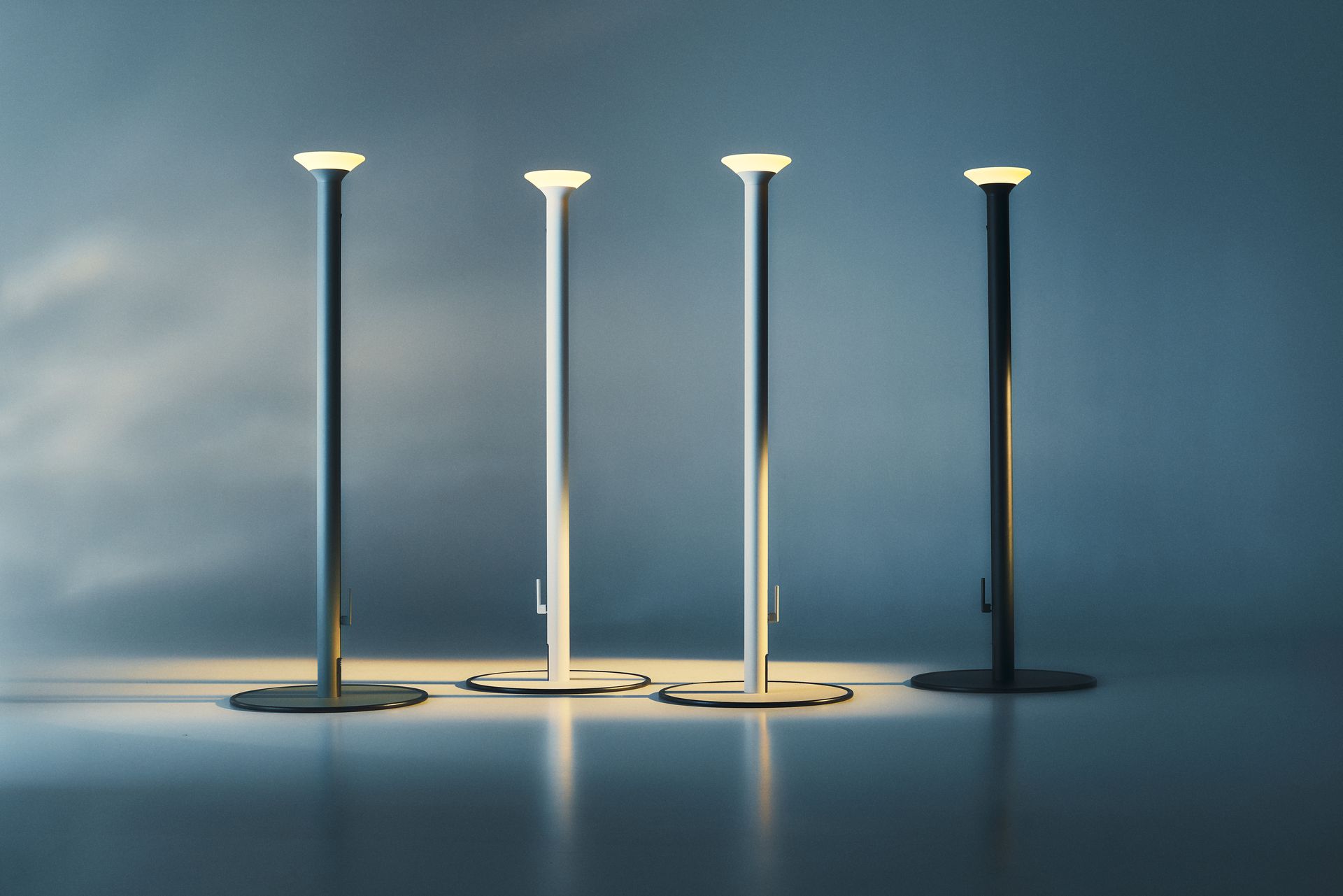
- Dual-Nature Utility: The integration of wireless, cable-free illumination rings within the column core allows a single asset to serve two distinct functions. It maximizes property revenue by effortlessly transitioning a daytime sun deck into a cinematic evening lounge.
SPECIFYING FOR THE HIGH-RISE MICROCLIMATE
The ultimate test of premium contract shading is found in the volatile microclimates of urban rooftops. High-velocity wind drafts and intense solar exposure require a structural resilience that natural materials or entry-level commercial frames cannot sustain.
By utilizing marine-grade, powder-coated aluminum extrusions alongside precision-calibrated internal stainless steel mechanics, Royal Botania’s shading solutions deliver absolute structural security. They are engineered to perform under the continuous rigor of commercial operation without losing their geometric purity. This blend of uncompromising durability and high-fashion minimalism represents the true future of hospitality curation—an architectural intervention designed for the modern guest experience and built to endure.
Please contact us here if you'd like to schedule a BDNY appointment!
Luxury Hospitality Design NYC | The BDNY Shading Review